
Story by Anthony Mathenia Photos by Rebekah Mathenia
Syncopated: Displace the beats or accents in so that strong beats become weak and vice versa
 The return home from a trip always presents a share of mixed feelings. On some level there is the disappointment that the excitement of new terrain is coming to an end. On the flip side there is that draw to that familiar setting, that place of comfort, home. I am Dorothy standing in the sparkling Emerald City of wonder, clacking my ruby heels together and longing for the black and white Kansas farm, even if it is dirty and smells like pig shit.
We plot our return through the American Southwest; venerable Route 66 is our road home. It whips and winds through the desolate landscapes and broken towns in Arizona and New Mexico. Every dot on the map haunts with past ghosts. It’s like going through a nursing home and looking at the fragile skeletons. In their dim eyes you can just catch glimmers of past lives full of adventure and glory.
 Each turn of the mother road holds shuttered motels forever locked at “no vacancy”. In those now boarded up rooms, men and women once held each other with the thrill of new love throbbing through their wide open veins. The neon is burned out with promises made to be broken. Nothing last forever. Progress is a motherfucking Interstate ripping through every good intention with the thrill of the open road. Progress is going from point A to point B in a linear fuck you at 70 miles per hour. It’s the destination that is important, not the landscape that is blurring in the side gaze — definitely not the past vanishing behind. Progress is a streamlined sonofabitch.
This leg of the trip is made more poignant with the recent visit to Disney’s Carsland fresh in memory. The film Cars was based on director John Lasseter’s own family road trip over this asphalt time machine. As we traverse through the towns and places that inspired fictional Radiator Springs, I have a new appreciation for what I had considered one of Pixar’s lesser endeavors. Stripped from the Hollywood trappings it is a sentimental lament to what was left behind.
 In Tucumcari, New Mexico, we check into the Historic Route 66 motel. It doesn’t have the brilliant neon of the Blue Swallow down the road, but it makes up with it in mid-century modern style. Parked outside is a gleaming black Cadillac. The bright lobby inside looks like it could double as a Mad Men set. The standout feature is a front desk counter made out of petrified wood. As we settle down, Cars happens to be playing on the television. The Divine is really good at serving up these little coincidences to serve as signs telling our sub-conscience to wake the fuck up and pay attention. The rooms along the motel stretch have curtain wall windows, acting as a looking glass for those who want to watch the world drive by: coming, going, always moving.
 Road trips like these offer a neutral space to gaze out of life’s window. This is us at our most conflicted: forever seeking the new, exciting future and longing for the simplicity of the past. We want the shiny, we have a soft spot for the rusty and tarnished. We crave technicolor but long for black and white. This is our burden to bare as humans who have the sense to be able to tell past from present, to plot and plan, to remember yesterday, and hope for tomorrow. This is our shared journey through space and time.
THEY REFUSED TO STAY PUT. SO DID CD DAMITIO.
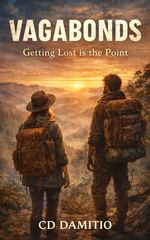
The person you just read about is one of them — the ones who chose the road over the roof, the horizon over the mortgage, the interesting life over the safe one. History is full of these people. Most of them never made the textbooks.
Vagabonds: Getting Lost Is the Point collects their stories — from Herodotus and Ibn Battuta to Jack Kerouac, Grandma Gatewood, and Anthony Bourdain. Sharp profiles, honest portraits, and the one thing they all share: a refusal to accept the default life on offer.
Written by CD Damitio — two VW buses, fifty countries, a decade outside America, and eventually Japan. He knows these people not as history but as kin.
The book ends with interviews with living vagabonds. And, in the final interview, with Planet Earth itself.
My books don’t fit in any neat box — because they’re about people who feel something huge is missing… and actually go look for it. Some even find it.
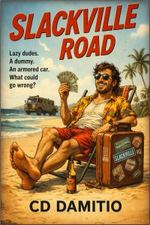
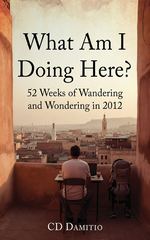
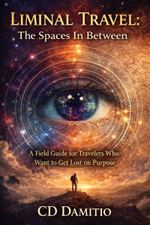
Dive into the full catalog and see which story hits you hardest. CD Damitio on Amazon.

CD Damitio writes at indignified.substack.com — essays on utopias, dystopias, and the spaces between. Free to read. No algorithm, no sponsored content. His books can be found on Amazon at https://www.amazon.com/stores/CD-Damitio/author/B001JP7NWA
CD Damitio writes INDIGNIFIED — utopias and dystopias explored. Free to read.