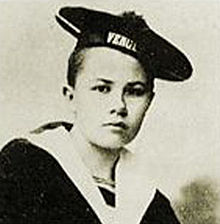
Traveling the world used to be a game that only the men played, but as in all fields, brave pioneers broke out of the Victorian conception of women as meek and mild and showed that even the hardest travel makes no distinction among the sexes. Isabelle Eberhardt was one of these extraordinary feminist vagabonds.
Isabelle Eberhardt was a Swiss writer and explorer who lived and traveled widely in North Africa. She is considered to have been an extremely independent individual, who refused normal European ethics and characterization of women. Instead she followed her own path which led her to world travel. Isabelle’s first trip was with her mother to North Africa in 1897. They were trying to set up a new life there on this journey, and during that time they both converted to Islam.
 Isabelle’s half brother Vladimir committed suicide and another brother was married to a French woman whom Eberhardt was not in favor of. From then onwards, she spent her life in Africa, she made Northern Algeria and Morocco her home and became a true desert vagabond. Isabelle was in Tunisia for some time as well. She was frequently disguised as a man and there are many who conjecture that she not only lived as a man but loved women as a man does.
The life and writings of Isabelle Eberhardt:
The Nomad
In the Shadow of Islam
Prisoner of Dunes
The Oblivion Seekers
The Vagabond
 Isabelle married an Algerian soldier, Slimane Ehnni in 1901. She was known to drink and fight in the hardest of ways. She died in a flash flood in Algeria in 1904. She had rented a house there which was constructed of clay. The house collapsed on Isabelle and her husband during the flood, she saved her husband but she didn’t survive the disaster. She wrote about her travels in several books and the newspapers of France.
Her books and articles include “In the Hot Shadow of Islam”, “Algerian Short Stories” and “The Day Laborers”. She also wrote a novel, Vagabond which was translated into English by Annette Kobak. The journals of Isabelle were recovered from the flash flood, they covered the final four years of her life and now these journals are also available in English.
Isabelle Eberhard was a nomad in Africa but more importantly she explored the limits and boundaries of gender as well as the deserts of Africa and continued her writing during that time. Most of her novels, books and journals on her travels can be found in English, Spanish, French, and German.
THEY REFUSED TO STAY PUT. SO DID CD DAMITIO.
The person you just read about is one of them — the ones who chose the road over the roof, the horizon over the mortgage, the interesting life over the safe one. History is full of these people. Most of them never made the textbooks.
Vagabonds: Getting Lost Is the Point collects their stories — from Herodotus and Ibn Battuta to Jack Kerouac, Grandma Gatewood, and Anthony Bourdain. Sharp profiles, honest portraits, and the one thing they all share: a refusal to accept the default life on offer.
Written by CD Damitio — two VW buses, fifty countries, a decade outside America, and eventually Japan. He knows these people not as history but as kin.
The book ends with interviews with living vagabonds. And, in the final interview, with Planet Earth itself.
My books don’t fit in any neat box — because they’re about people who feel something huge is missing… and actually go look for it. Some even find it.
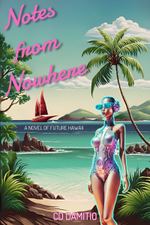
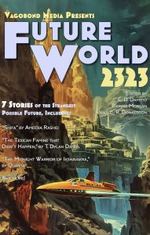
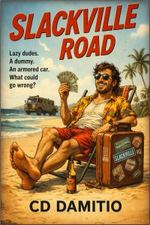
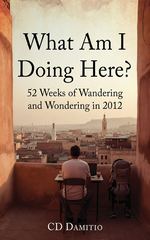
Dive into the full catalog and see which story hits you hardest. CD Damitio on Amazon.

CD Damitio writes at indignified.substack.com — essays on utopias, dystopias, and the spaces between. Free to read. No algorithm, no sponsored content. His books can be found on Amazon at https://www.amazon.com/stores/CD-Damitio/author/B001JP7NWA
CD Damitio writes INDIGNIFIED — utopias and dystopias explored. Free to read.